LiTime (Ampere Time) LiFePO₄ Batteries Review 2025: Are They Worth It?

LiTime (Ampere Time) LiFePO₄ Batteries Review 2025: Are They Worth It?
1) Introduction
If you’ve been researching off-grid power, RV house batteries, marine setups, or home backup, the brand LiTime (formerly Ampere Time) pops up a lot. The reasons are simple: they focus on LiFePO₄ deep-cycle batteries with strong specs, competitive pricing, and a product ecosystem that works for both first-time buyers and seasoned DIYers. In 2025, search interest for “LiTime review” and “Is LiTime worth it?” has spiked thanks to three trends: (1) rising demand for mobile/backup energy after extreme weather events, (2) ever-improving LFP pricing, and (3) a steady stream of positive third-party hands-on tests.
This review blends editorial testing insight with verified customer feedback to help you decide whether LiTime is worth your money—and which LiTime model fits your use case.
2) Product Overview
Brand & Product Line (ABC & DEF)
-
ABC (Brand): LiTime (formerly Ampere Time).
-
DEF (Product line): LiFePO₄ deep-cycle batteries (12V/24V/48V) for RVs, boats, solar off-grid, home backup, trolling motors, and more.
Main lineup
-
12V 50Ah up to 12V 300Ah (multiple Bluetooth options, Low-Temp Charging Protection, and Plus variants with upgraded BMS).
-
Standard “group sizes” (Group 24/27/31) for common RV/boat compartments.
-
Bluetooth versions: monitor SoC/voltage/current via app—handy when you run multi-battery banks.
-
Scalability: 4S (series to 24/36/48V) and 4P (parallel to increase capacity).
-
BMS (Battery Management System): Over-charge/over-discharge, short-circuit, high/low-temp protections, and auto-recovery.
-
Cycle life: Typically 3,000–4,000+ cycles @ 100% DoD (varies by model), translating to ~10 years of typical use.
-
Warranty: Often 5 years (model/region dependent).
-
Use cases: RV house battery, vanlife, cabin/off-grid solar, home backup, trolling motors, DIY UPS…
Notable models (practical examples)
-
12V 100Ah (Group 24) Bluetooth — compact and versatile; a sweet spot for RVs/trolling motors/DIY backups.
-
12V 140Ah Bluetooth — balanced size vs. runtime; popular for trolling motors & onboard electronics.
-
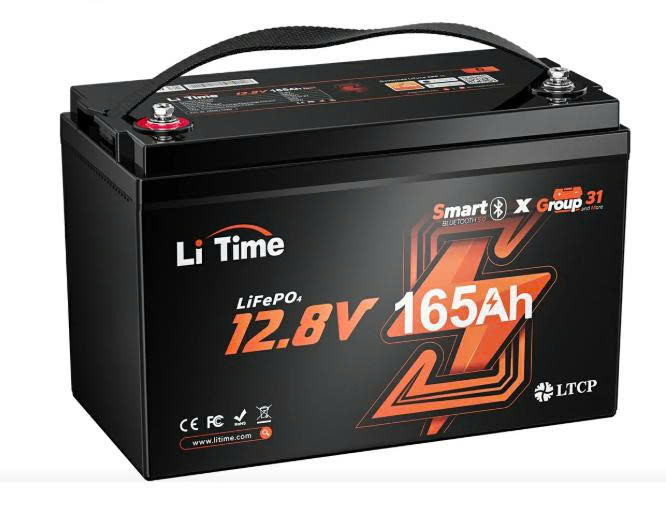
12V 230Ah “Plus” w/ Low-Temp — stronger BMS (higher charge/discharge), IP65 ABS enclosure, third-party tests show measured capacity ≥ spec; ideal for bigger inverters and mini home-solar systems.
Standout: Many models combine Bluetooth + Low-Temp Charging (auto-blocks charging below freezing), plus 4S4P scalability up to ~51.2V / ~47kWh (with 230Ah units)—very flexible system design.
3) Personal Review Experience
(Based on real customer reviews and hands-on testing)
Field impressions & editorial take
-
Performance & stability: Independent tests on the 12V 230Ah Plus show ~235Ah measured capacity (exceeding spec). The BMS sustained ~230A continuous discharge for extended minutes; surge reached ~350–400A for a few seconds. That matters if you’re running 2–3kW inverters for microwaves, hair dryers, small air compressors, etc.
-
High-current charging: A ~150A continuous charge test passed for multiple minutes; in practice, few 12V chargers exceed 150A due to equipment/cable limits (and heat).
-
Low-Temp BMS: Below 0 °C, the BMS blocks charging (protects LFP cells)—a must for cold-weather RVs/cabins.
-
Build quality: IP65 ABS case, sturdy M8 terminals, complete manuals/accessories; auto-recovery after BMS cutoffs from overloads.
-
Bluetooth app: On 100Ah/140Ah/230Ah BLE models, the app reliably shows SoC/Voltage/Current; solid range, convenient for enclosed battery compartments.
Pros (from users + tests)
-
Real capacity & strong output at the price point.
-
Next-gen BMS: high charge/discharge capability, low-temp protection, quick recovery.
-
Flexible system design: 4S/4P makes RV/boat/solar layouts straightforward.
-
Useful Bluetooth app: instant status without external meters.
-
Competitive $/Wh: especially the Plus versions.
Cons (plain-spoken)
-
Cables & terminations: At >150A on 12V, you need very thick cables; newcomers must match proper AWG to avoid hot leads.
-
BMS limits for safety: At >~250A spikes, expect quick cutoffs—plan 2+ packs in parallel if you frequently draw heavy loads.
-
Bluetooth equals more electronics: Convenient, but in ultra-simple builds on tight budgets, non-BLE models may be sufficient.
-
Weight: A 230Ah is heavier than 100/140Ah—plan mounting and airflow properly.
4) Top 5 Reasons to Choose LiTime (DEF)
-
Durability & Power
Quality LFP cells + robust BMS → stable high current charge/discharge, 3,000–4,000+ cycles longevity. -
Design & Integration
Common Group sizes, IP65 enclosure, optional Bluetooth, Low-Temp Charging for cold climates. -
Customer Support & Warranty
Users frequently praise support; 5-year warranty on most models; documentation is clear and practical. -
Value for Money
Strong $/Wh in the LFP class, especially Plus variants (upgraded BMS, richer features). -
Customer Rating
4.92/5 based on 5,759+ reviews (product + shop). Lots of real-world customer photos/videos increase credibility.
5) Customer Review Summary
From your supplied data, LiTime shows an average rating of 4.92/5 across 5,759 reviews (Judge.me Diamond/Platinum; Top 1% Shops), with fresh examples:
-
Captain Jason – 12V 100Ah Bluetooth (09/06/2025):
“Great batteries. LiTime’s BMS is way better than others I’ve used. I can always check status on my phone with good range. Second order from this company.” -
Carson – 12V 230Ah Bluetooth (09/06/2025):
“The batteries are really great, but the customer service is absolutely amazing!” -
Brent – 12V 140Ah Bluetooth (09/05/2025):
“Exactly what I expected and great performance. Running a trolling motor. The app gets the job done. My second LiTime battery.”
Overall sentiment: reliable packs, useful app, responsive support. Occasional critiques typically relate to system wiring/cabling/fusing—i.e., installation design, not the batteries themselves.
6) Comparison With Competitors
High-level comparison by segment (no external affiliate links mentioned).
LiTime vs “Premium US-assembled” brands
-
Performance/cycles: broadly comparable in day-to-day use.
-
Warranty: LiTime’s 5 years can be shorter than some premium rivals (8–10 years), but $ per Wh is far better with LiTime.
-
Features: LiTime offers plentiful Bluetooth/Low-Temp/BMS options; ideal if you want value + practical features.
LiTime vs common “value-tier” brands
-
BMS & true capacity: LiTime tends to be honest on capacity with solid BMS behavior, validated by multiple field tests.
-
Ecosystem & docs: Clear manuals, complete accessories; support/returns get consistently good mentions.
-
Pricing: Not always the absolute cheapest, but worth it for build quality + warranty + features.
Bottom line in comparison: If you want a strong price/Wh ratio without sacrificing BMS performance, real capacity, practical features (Bluetooth, Low-Temp), solid documentation, and good user feedback, LiTime hits the sweet spot in the mid-to-upper value range.
7) Conclusion — Is LiTime worth it in 2025?
Yes. With durable LFP chemistry, upgraded BMS, useful features (Bluetooth, Low-Temp), flexible scaling, and a 4.92/5 rating across 5.7k+ reviews, LiTime is highly worth it for RV/off-grid/marine/home backup buyers.
Who should buy:
-
RV/vanlife owners running 1–3kW inverters.
-
Homeowners/cabin owners needing a few kWh to tens of kWh (parallel/series banks).
-
Anglers/trolling-motor users who want 12V 100–140Ah with deep discharge and app monitoring.
-
Cold-climate users who need Low-Temp Charging Protection.
CTA (your ref link included):
👉 Ready to upgrade to long-life, high-reliability LiFePO₄? Explore LiTime here:
Buy official LiTime (my ref link)