BypassGPT Review (2025): Does “Undetectable AI” Actually Work?

BypassGPT – 2025 Review (Read This Before You Buy)
Your link: https://www.bypassgpt.ai/?ref=owriztj
Snapshot
-
What it claims: “Humanize” AI text so it doesn’t get flagged by AI detectors.
-
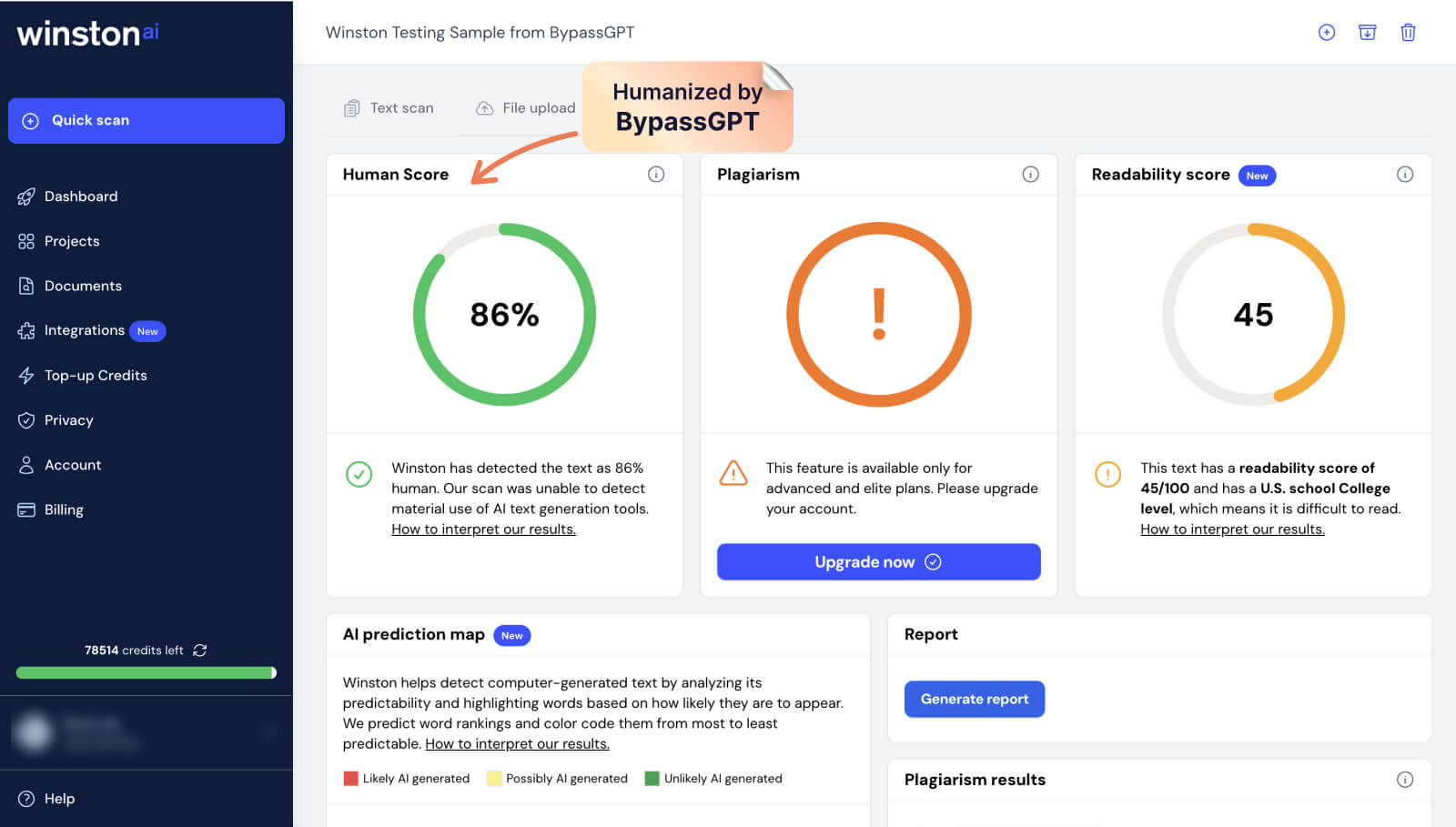
Reality check: Mixed-to-poor results, awkward rewrites, and high risk for anyone trying to use it in school or professional settings.
What BypassGPT is supposed to do
The pitch is simple: paste AI-written text → get a “more human” version → pass popular detectors. In practice, results are inconsistent. Even when a sample slips past one checker, the rewrite often reads wooden or odd, which defeats the point for real readers (professors, editors, clients).
The big caveats (please read)
-
Academic & workplace risk: Trying to evade detection can violate honor codes, contracts, and platform policies. Getting caught can mean failed courses, lost clients, or banned accounts.
-
Detector roulette: There’s no universal “undetectable” mode. Models and detectors change constantly—what passes one day can fail the next.
-
Quality trade-off: Outputs frequently insert odd synonyms, stilted phrasing, and broken logic. Humans notice—even if a single detector doesn’t.
-
Ethics & compliance: Many organizations now require disclosure of AI assistance. Evading that is risky and, frankly, unnecessary when transparent, compliant workflows exist.
Pros
-
Fast “humanize” pass: Quick rephrasing for low-stakes drafts.
-
Multiple modes/languages (on paper): Offers various styles and language options, though quality varies.
Cons
-
Inconsistent detection outcomes: Passing one tool doesn’t mean passing others.
-
Awkward tone & flow: Rewrites often feel obviously machine-tweaked.
-
Free tier is tiny: Usually not enough to evaluate meaningfully.
-
Support/refunds: Common complaint across reviews: slow or unhelpful.
Pricing (typical pattern)
-
Free trial: Extremely limited word count (often ~180 words).
-
Paid tiers: Gate the usable features—but do not guarantee detector success or natural style.
Who (might) use this
-
Low-stakes drafting only: If you just want a quick “different phrasing” pass for internal notes where compliance isn’t an issue.
-
Not for: Academic submissions, professional deliverables, journalism, SEO “stealth” content, or anything requiring policy compliance and real readability.
Safer, better alternatives (what actually works)
If your goal is publishable, human-quality writing that’s also policy-safe:
-
Draft, then human edit. Use an AI assistant for ideation/outlines, then rewrite in your voice, add lived details, citations, and structure.
-
Style-level tools. Run your draft through readability/clarity checkers (e.g., Hemingway-style editors) to tighten prose without detector “gaming.”
-
Source-first writing. Pull quotes, data, and examples from real sources and synthesize them; detectors are far less relevant when your piece is original analysis with references.
-
Transparent AI use. Where required, disclose AI assistance. Many orgs are fine with it when acknowledged and edited for accuracy.
-
If you must “humanize,” choose tools that focus on voice coaching (tone, structure, and clarity) rather than “detector evasion.”
 https://www.bypassgpt.ai/?ref=owriztj
Verdict
BypassGPT is not a reliable way to “be undetectable,” and it often harms the writing. For anything that matters—grades, clients, your brand—skip detector evasion and invest in genuine drafting, revision, and transparent, compliant AI support.
If you still want to poke around and form your own view, here’s your referral link again: https://www.bypassgpt.ai/?ref=owriztj
Social blurb (optional)
“Thinking about ‘undetectable AI’ tools? Most are unreliable and risky. Focus on strong drafts + honest editing instead. If you’re curious anyway, here’s the BypassGPT link: https://www.bypassgpt.ai/?ref=owriztj”